What does it take to make something unreal feel convincing?
For Jurassic Park, the answer emerged through small, daily decisions made far from the screen—inside workshops, editing rooms, and rain-soaked sets where technology and routine quietly reshaped filmmaking.
Audiences remember the dinosaurs. The people who built them remember cables, clay, code, and timing. Long before viewers felt awe, crews were learning how to blend machines with movement and imagination with process.
The result was not just a film, but a turning point in how stories could be made.
The production of Jurassic Park unfolded at a moment when digital tools were still experimental. Practical effects dominated cinema, and computers were used sparingly. What happened behind the scenes became a bridge between two eras, built through trial, restraint, and everyday problem-solving.
✨ AI Insight:
Over time, productions have begun to feel less like single creative events and more like evolving systems, where digital tools quietly guide daily decisions long before audiences see a result.
A Film That Was Meant to Be Mechanical
Early plans for Jurassic Park relied heavily on physical models. Full-scale animatronic dinosaurs were built, capable of blinking, breathing, and moving with weight.
These creations were impressive but limited. They required extensive setup. They moved slowly. Each scene demanded careful choreography.
The original vision treated dinosaurs as rare appearances. The story would suggest them more than show them.
Then a test animation arrived.
A short digital sequence showed a dinosaur walking naturally across a plain. It was fluid. It felt alive. The tone of the project shifted.
What followed was not replacement, but integration.
Two Worlds Learning to Share the Screen
The production became an experiment in coexistence. Animatronics handled close interaction. Digital models handled motion and scale.
This required new workflows. Editors learned to leave space for creatures that did not yet exist. Camera operators framed empty air. Actors reacted to markers and instructions rather than visible threats.
Technology entered the daily rhythm of filming.
A scene no longer ended when the camera stopped. It continued in post-production, where digital teams extended movement and presence.
Filmmaking became layered across time.
Rain, Malfunctions, and Real Weight
One of the most famous sequences—the T. rex attack—was intended to be partially digital. Instead, rain changed everything.
Water soaked the animatronic, adding weight and unpredictability. The machine began to move in unintended ways. The head drifted. The skin shuddered.
Rather than halt production, the crew adapted.
The instability gave the creature realism. Its movement felt less mechanical, more animal. What began as a technical problem became an aesthetic advantage.
The moment illustrates a recurring pattern: technology created opportunity, but reality shaped outcome.
Editing Without a Creature
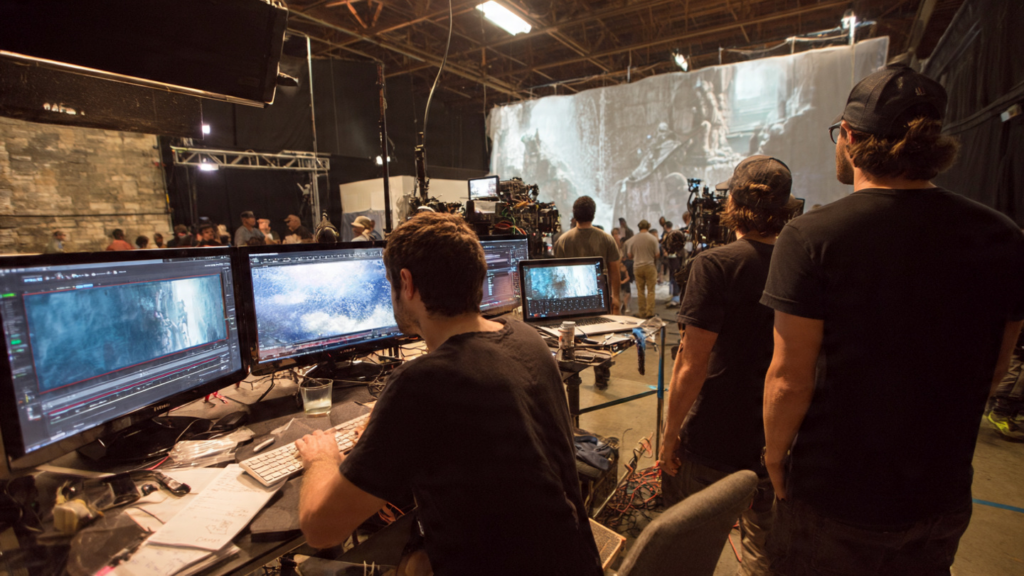
Editors often worked with empty frames. They cut scenes knowing that motion would be added later.
This required imagination, but also discipline. Timing mattered. A pause too long made a creature feel slow. A cut too quick reduced impact.
Digital tools provided possibilities, but editors provided rhythm.
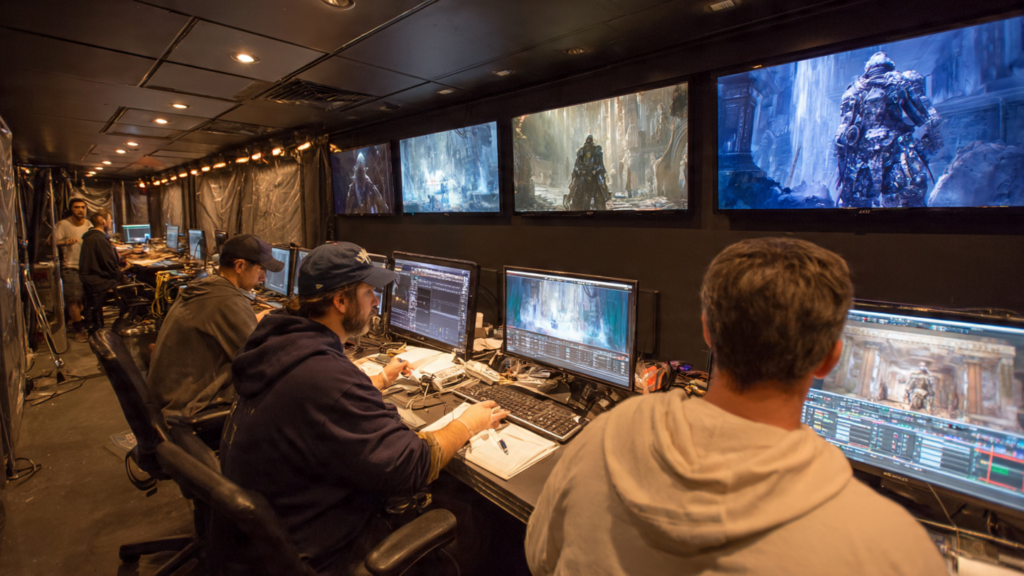
The dinosaurs’ presence emerged from human judgment.
Technology expanded what could be shown. Craft determined how it was felt.
Sound as Presence
Much of the dinosaurs’ power came from sound. Engineers layered animal calls, machinery noise, and environmental echoes.
These sounds were tested in ordinary rooms. Small speakers played roars while editors watched silent footage. Adjustments were incremental.
A lower pitch felt heavier. A delayed echo made distance believable. Sound gave mass to pixels.
The process was quiet and repetitive.
Spectacle grew from routine listening.
Learning to Trust the Invisible
Actors often performed without visual reference. They responded to instructions, gestures, or tennis balls on sticks.
This required a different form of focus. Performance became imaginative rather than reactive.
Directors learned to describe movement precisely. “The head lowers here.” “The eye meets yours.”
Communication replaced sight.
The set became a place where everyone believed in something not yet visible.
This trust extended to audiences. The film invited viewers to accept what the camera suggested rather than what it showed.
Technology as a Background Presence
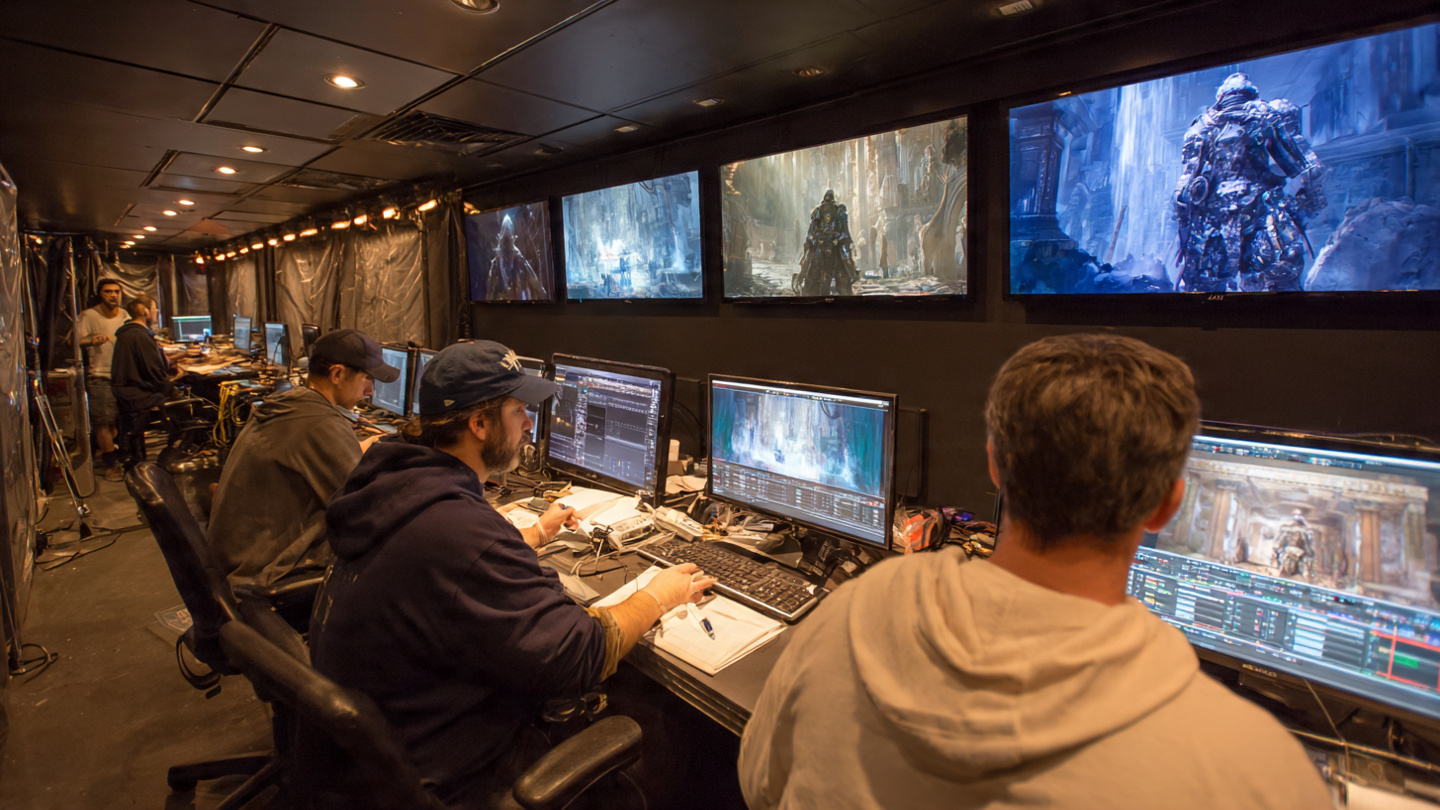
The production did not treat computers as center stage. Digital work happened quietly, away from cameras.
Teams operated in parallel. While filming continued, animators refined motion. While editors assembled scenes, engineers adjusted textures.
Workflows overlapped.
This structure mirrored modern production models, where creation unfolds across spaces and timelines.
The set was only one layer of the film’s existence.
A New Rhythm for Blockbusters
Jurassic Park did not announce a technological revolution. It demonstrated one through restraint.
The film used digital effects sparingly. Dinosaurs appeared only when they mattered. Absence built anticipation.
This taught a lesson that later productions often forgot.
Technology’s strength lay not in abundance, but in placement.
Behind the scenes, this meant constant judgment. Every effect asked a question: does this moment need to be shown?
The answer shaped tone.
Why It Matters
The legacy of Jurassic Park is not that it used computers. It is that it integrated them into daily filmmaking.
The film normalized a process where physical and digital work coexist. It showed that technology could serve storytelling rather than dominate it.
Modern productions now operate in this hybrid mode. Sets anticipate digital layers. Actors perform for unseen elements. Editors shape scenes across time.
What feels seamless to audiences begins as coordination.
Understanding this reveals how spectacle is built.
It is not sudden.
It is procedural.
The Quiet Impact
Behind-the-scenes stories from Jurassic Park endure because they reveal how change actually happens.
Not through declarations.
Through routines.
A test animation.
A wet machine.
An editor’s pause.
A sound engineer’s adjustment.
Each decision was ordinary.
Together, they reshaped cinema.
The film’s dinosaurs still feel alive because they were built through patience rather than novelty. Technology entered film not as replacement, but as collaborator.
What happened behind the scenes was not a revolution.
It was a habit forming.
And habits, once established, become the future.