Before an iconic performance ever reaches the screen, it often passes through a moment of doubt. A name is suggested that feels unexpected. A résumé doesn’t quite match the tone of the role. Someone in the room asks whether the audience will accept it. In that pause between certainty and risk, casting becomes a gamble.
Some of the most memorable characters in film and television exist because someone chose uncertainty over safety.
At the time, these decisions rarely feel bold. They feel uncomfortable. They challenge assumptions about type, genre, and audience expectation. Only later, once the performance settles into public memory, does the choice begin to look inevitable.
The gamble disappears.
What remains is the character.
✨ AI Insight:
It often becomes clear in hindsight that what felt like a risk at the time was simply a willingness to let a story become something new.
When Familiar Faces Don’t Seem to Fit
Casting usually leans on patterns. Dramatic roles go to dramatic actors. Comedians stay in comedy. Action heroes look like action heroes. These habits exist for practical reasons: audiences form expectations, and studios seek predictability.
A gamble begins when someone challenges that logic.
When Bryan Cranston was proposed for Breaking Bad, many executives hesitated. He was widely known as a sitcom father in Malcolm in the Middle. The role of Walter White required menace, vulnerability, and moral complexity. On paper, it felt mismatched.
What emerged was a performance that redefined not only Cranston’s career, but the emotional vocabulary of television drama. The transformation felt so complete that it erased the original doubt.
The gamble was not that Cranston could act.
It was that viewers would follow him into unfamiliar territory.
They did.
The Risk of Rewriting Identity
Sometimes the risk is not about talent, but about identity.
When Heath Ledger was cast as the Joker in The Dark Knight, the reaction was immediate skepticism. Ledger was associated with romantic leads and introspective dramas. The Joker carried decades of expectation shaped by comic art and earlier performances.
The casting felt misaligned with public memory.
Ledger’s performance did not try to match what came before. It reshaped the character entirely—chaotic, unsettling, intimate. The gamble paid off by expanding what the Joker could be.
It did not replace previous versions.
It redefined the role’s emotional range.
The decision required trust in an actor’s unseen potential.
Comedy Into Drama
One of the most consistent casting risks involves moving actors across tonal boundaries.
Jim Carrey in The Truman Show.
Robin Williams in Good Will Hunting.
Steve Carell in Foxcatcher.
Each was known for humor. Each was asked to carry emotional weight. Each faced initial resistance from audiences accustomed to laughter.
What made these gambles work was not novelty.
It was restraint.
These performances did not abandon the actors’ instincts. They redirected them. The same timing that produced comedy now produced tension. The same warmth became vulnerability.
The gamble lay in believing that range mattered more than reputation.
And that audiences would adjust.
When Youth Becomes Authority
Another form of risk appears when age and experience do not align with expectation.
Casting a young actor in a role associated with maturity can feel unstable. Authority is often linked to age, especially in genres like fantasy or historical drama.
When Elijah Wood was chosen as Frodo in The Lord of the Rings, the role demanded emotional gravity and narrative centrality. The story would hinge on someone who did not yet look like a hero.
The risk was that viewers would not trust him to carry the epic.
Instead, his youth became the story’s emotional anchor. The fragility was not a weakness. It was the point.
The gamble reframed heroism.
The Invisible Equation
Casting risks succeed when three elements align:
- An actor capable of transformation
- A story flexible enough to adapt
- A director willing to shape rather than enforce
Without all three, a gamble becomes miscasting.
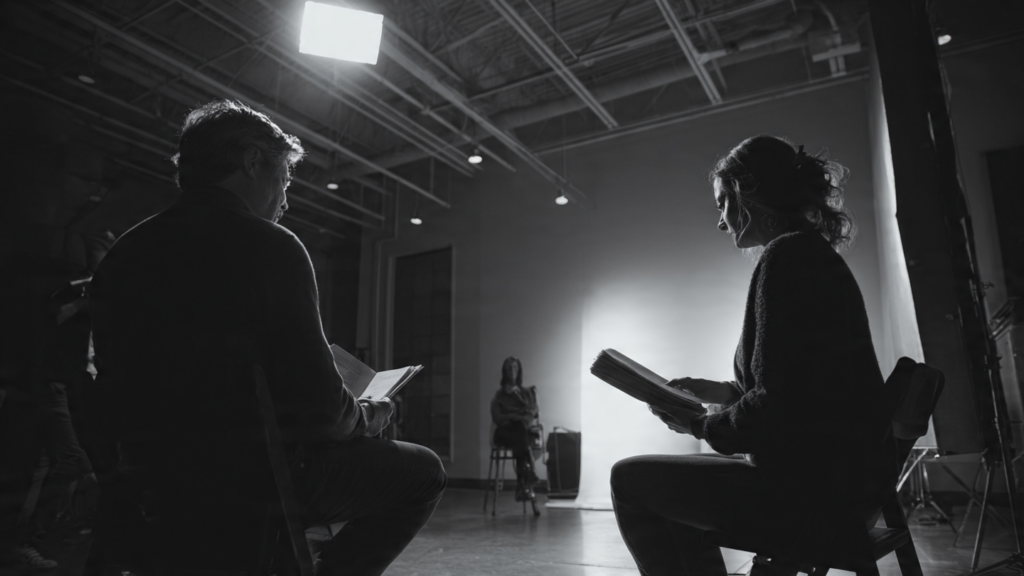
The audience rarely sees this equation. What they experience is coherence or dissonance. The behind-the-scenes hesitation vanishes once the character feels real.
That reality is built slowly.
Through rehearsals.
Through rewritten scenes.
Through performance choices that shift tone.
The gamble is not a single decision.
It is a sustained act of belief.
Why Safe Choices Rarely Redefine Stories
Safe casting choices often work. They deliver competence. They meet expectations. They reduce risk.
What they rarely do is expand a story’s emotional territory.
A gamble introduces tension before a single frame is shot. It forces a creative team to ask new questions:
- What if this character felt different?
- What if the audience had to adjust?
- What if the story became something else?
These questions change the work.
They open space for reinterpretation.
They allow a role to grow beyond its outline.
The performances remembered most vividly often emerge from that space.
The Audience’s Role in the Gamble
Every casting risk depends on the audience’s willingness to follow.
Viewers bring assumptions. They recognize faces. They carry memory. A gamble asks them to release that familiarity and see differently.
When it succeeds, something subtle happens.
The actor disappears.
The character remains.
That disappearance is the measure of success.
It does not happen instantly. It happens over scenes, episodes, hours of viewing. Doubt softens. Resistance fades. The performance becomes normal.
Eventually, it becomes definitive.
The original hesitation becomes a footnote.
Why These Stories Endure
People continue to talk about casting gambles because they reveal how fragile certainty is in creative work. What seems wrong can become essential. What feels risky can become routine.
These stories persist because they mirror everyday experience.
Growth often begins as discomfort.
Change often looks like error.
Potential often appears as misfit.
In that sense, casting gambles resonate beyond film.
They reflect how new identities are formed.
How expectations are broken.
How stories evolve.
What looks like a risk in the present often becomes the standard in memory.