Some scenes look effortless on screen. A quiet conversation, a gentle walk, a single tear falling at the right moment. What viewers rarely see is how much coordination, repetition, and restraint those moments require behind the camera.
People have begun to notice this gap through interviews and behind-the-scenes stories. The scenes that feel simplest often demand the most control. Difficulty does not always come from explosions or stunts. It often comes from precision.
A hard scene is not defined by scale. It is defined by how much must align for it to feel natural.
✨ AI Insight:
As filmmaking becomes more technically layered, the scenes that appear calm and simple often require the greatest amount of invisible coordination.
Emotional Scenes That Cannot Be Rushed
Moments of grief, joy, or vulnerability are among the most difficult to capture. They depend on timing, trust, and emotional availability.
Actors may need to reach the same emotional state repeatedly across many takes. Each version must feel authentic. Fatigue cannot show. Expression cannot drift.
The set becomes quiet. Movement slows. Everyone waits for something internal to arrive on cue.
The challenge is not feeling emotion. It is feeling it again, and again, without diminishing its truth.
Dialogue That Feels Natural
A conversation that sounds real often requires intense control. Camera placement, lighting, and sound must align without disrupting rhythm.
Actors repeat the same lines while maintaining spontaneity. A pause must feel unplanned even when it is timed. Eye contact must appear accidental while hitting precise marks.
Noise intrudes. A plane passes. A microphone fails. The scene resets.
What sounds effortless is built from discipline. The difficulty lies in making structure disappear.
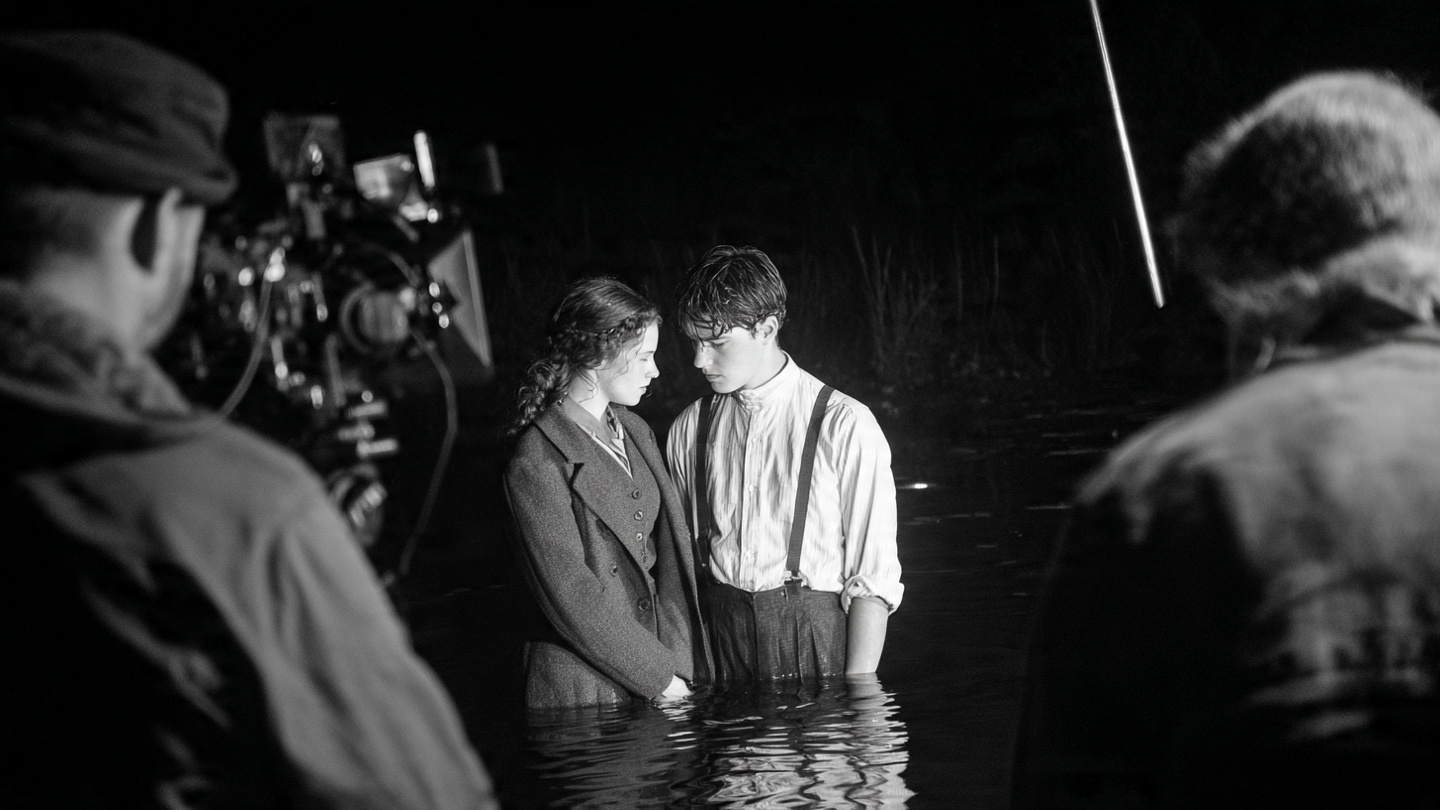
Scenes Shot in Water
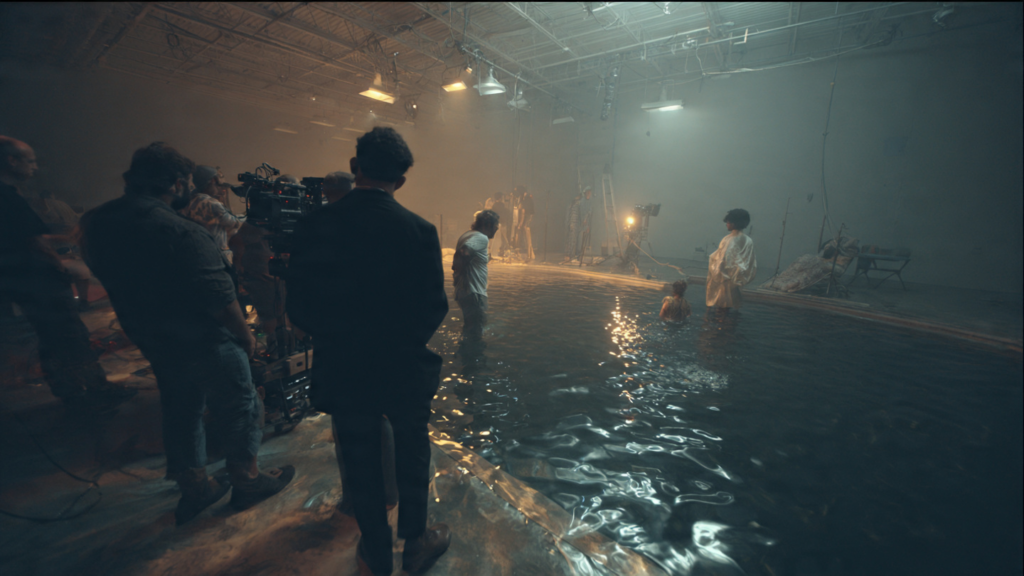
Water multiplies every challenge. Movement becomes heavy. Sound distorts. Temperature drains energy.
Actors must control breath and balance. Crew members manage equipment that resists moisture. Safety teams remain alert.
A short sequence may require hours of setup. Each take demands recovery.
The audience sees fluid motion. The set experiences resistance.
Water does not follow choreography. It reshapes it.
Large Crowd Moments
Crowd scenes appear chaotic, yet they are precisely arranged. Hundreds of people must move in coordinated patterns.
Extras receive cues. Camera paths are fixed. Timing must match across distance.
A single error can ripple across the frame. The reset affects everyone.
Energy must be sustained. Focus must remain.
The difficulty is not noise. It is alignment across scale.
Stunts That Look Ordinary
Some of the hardest scenes are not dramatic. A character crosses a street. A door closes at the wrong time. Someone trips.
These moments must appear accidental while being safe.
Stunt teams rehearse angles. Performers learn controlled falls. Cameras capture only what feels unplanned.
The goal is invisibility. Safety must vanish inside realism.
The challenge is hiding preparation.
Long, Unbroken Takes
Extended shots demand endurance and accuracy. Every movement must align without pause.
Actors carry emotion through space. Crew members shift silently. Camera operators maintain rhythm.
A mistake near the end resets everything.
These scenes require collective focus. Everyone becomes part of the performance.
The difficulty lies in sustaining presence without interruption.
Weather-Dependent Moments
Scenes tied to sunrise, snowfall, or storms depend on timing beyond control.
Crews wait for light. Actors hold readiness. Equipment stands by.
When the moment arrives, everything must work at once.
If it passes, the day ends.
The difficulty is not weather itself. It is preparing for something that may not arrive.
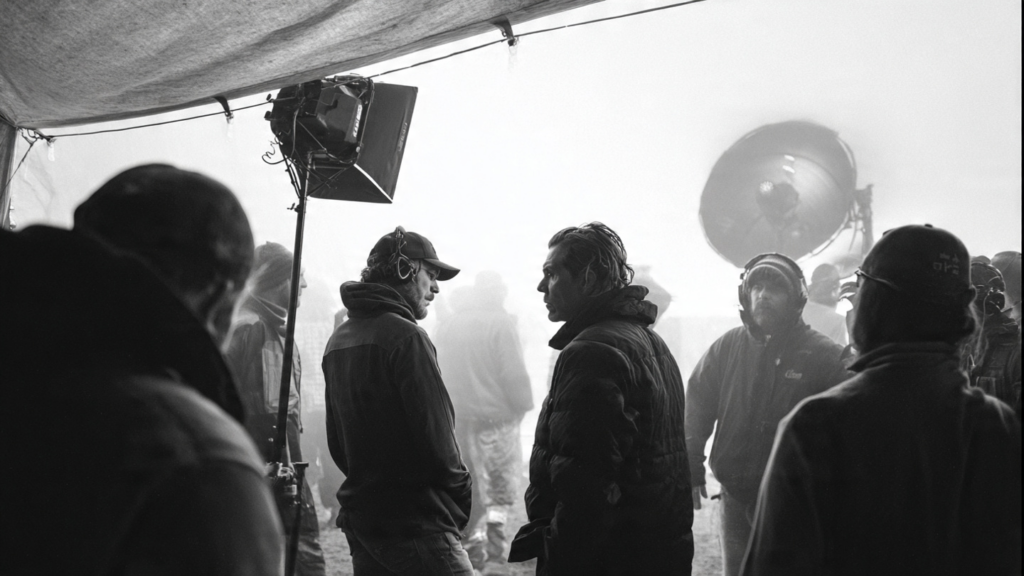
Quiet Moments With No Movement
Stillness can be harder than action. A character sits. Nothing happens.
Yet everything must be felt.
Breathing, posture, and micro-expression carry meaning. Camera, sound, and light must not intrude.
Any distraction breaks the spell.
The difficulty is resisting motion in a medium built on it.
Why These Scenes Matter
Hard scenes reveal how films are truly made. They show that difficulty is not always visible.
A film’s emotional core often depends on moments that demand the most restraint. These scenes shape how stories are remembered.
They remind audiences that realism is constructed. What feels natural is carefully maintained.
Every quiet frame carries unseen effort.
The Work Beneath the Image
Viewers experience result. Cast and crew remember process.
They recall the waiting, the repetition, the resets.
A tear that arrived on the fifth take.
A pause that finally felt right.
A scene completed just before light faded.
These memories remain because they required presence.
The hardest scenes to film are not always the loudest.
They are the ones that must feel like nothing special.