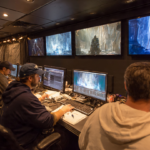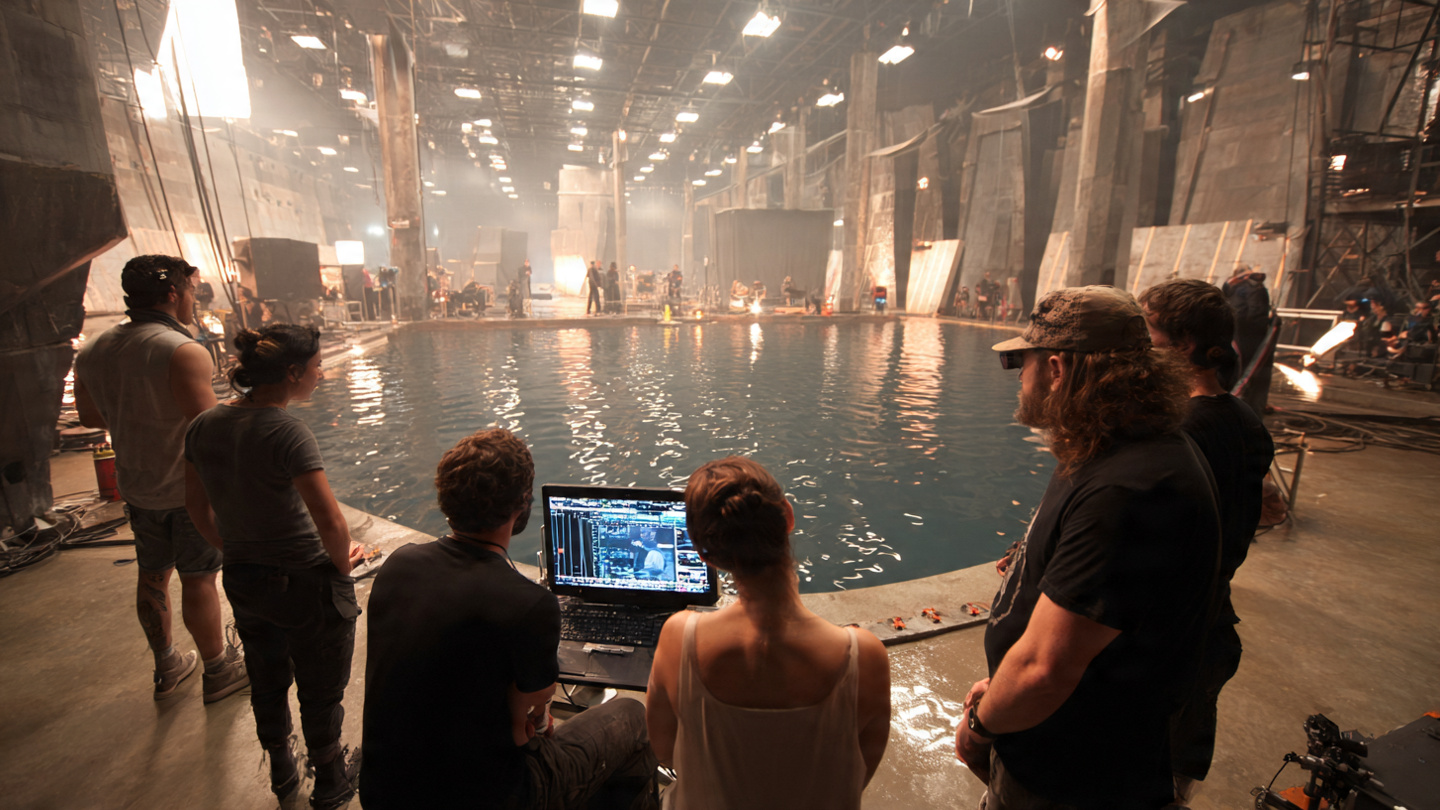
What does it take to recreate a moment the world already thinks it knows?
For Titanic, the answer unfolded far from movie theaters, inside massive water tanks, steel frameworks, and carefully choreographed routines that turned a historical tragedy into a living environment.
Long before audiences felt the ship tilt or heard the music swell, hundreds of people were solving everyday problems—how to move safely on wet decks, how to communicate through noise, how to repeat complex scenes for weeks without losing rhythm.
This was not spectacle. It was routine.
The production of Titanic became one of the most demanding sets in modern film history, not because of drama, but because of logistics. The scale of the project turned filmmaking into an industrial operation, where technology, planning, and human coordination quietly shaped every frame.
✨ AI Insight:
Large productions have gradually come to resemble living systems, where technology and routine merge so tightly that storytelling becomes an everyday operational process rather than a single creative act.
Building a Ship That Could Be Lived In
The set was not a backdrop. It was a partial, functional ship built at near full scale in Baja California. Crew members walked its decks daily, just as passengers once did.
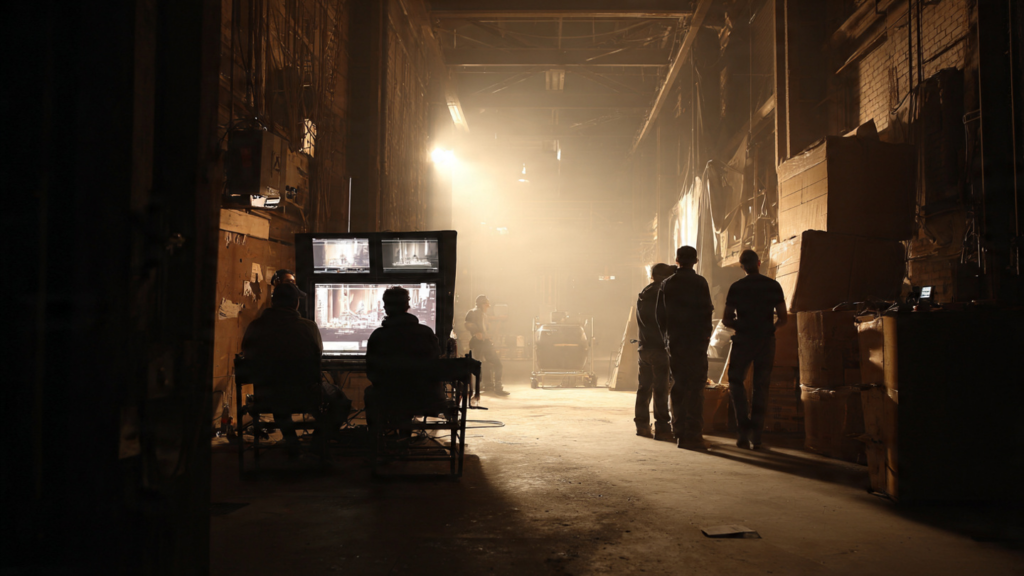
This environment changed how work felt. Actors did not step into a scene; they entered a space. Crew members navigated corridors, railings, and staircases that mirrored the original vessel.
The scale required industrial planning. Water systems, drainage, safety walkways, and lighting rigs were embedded into the structure. The set behaved like architecture, not scenery.
Workdays unfolded inside a place that felt permanent, even though it was designed for illusion.
Water as a Working Condition
Much of the film took place in controlled tanks filled with millions of gallons of water. These were not symbolic pools. They were deep, mechanically managed environments.
Scenes often involved actors standing in cold water for hours. Crew members wore waterproof gear. Communication required hand signals and rehearsed cues because sound carried poorly.
Every movement had to be planned. A step taken too early could disrupt a camera path. A wave timed incorrectly could reset an entire sequence.
Water became a collaborator. It shaped pacing, posture, and patience.
Repetition Without Drama
Iconic moments were built through repetition. A short sequence might be filmed dozens of times, each pass refining motion, light, and timing.
This rhythm defined daily life on set. Performances were not delivered once. They were adjusted incrementally, guided by camera placement and mechanical timing.
Actors learned to conserve energy. Crew members learned to reset quickly. The emotional weight audiences feel emerged from procedural consistency.
The drama on screen was born from calm execution.
Technology as an Invisible Partner
Digital tools quietly guided the production. Motion-control cameras synchronized with practical effects. Computer models helped plan how water would move across decks.
These systems reduced guesswork. They allowed complex sequences to be rehearsed virtually before physical execution.
Technology did not replace craft. It structured it.
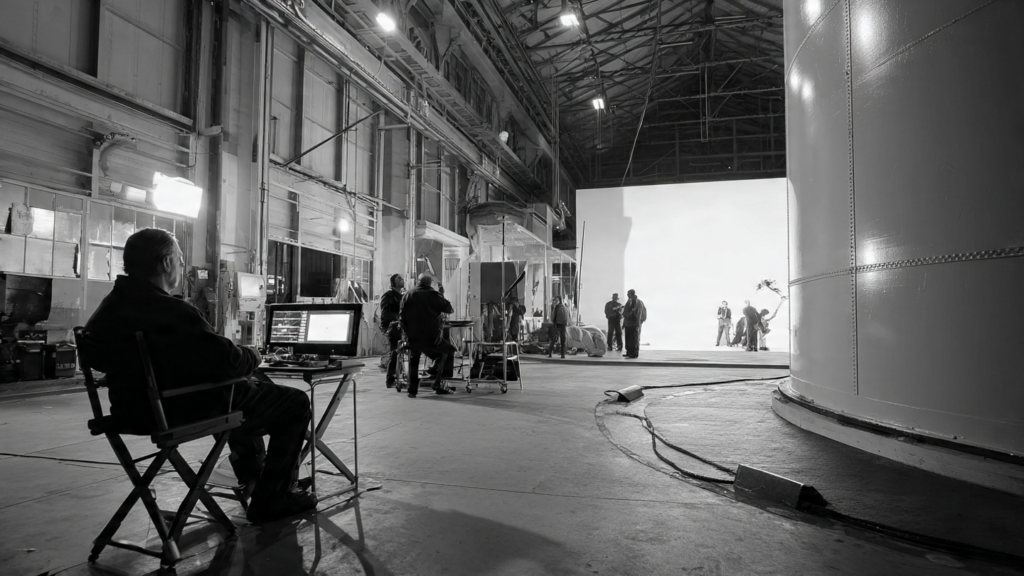
What appears as cinematic chaos was often the result of software-driven choreography. Every wave, tilt, and camera sweep followed data as much as instinct.
Communication in a Moving World
A standard film set relies on stillness. Titanic relied on motion. Platforms shifted. Water surged. Props floated.
Communication adapted. Crew members developed routines for speaking over pumps and wind machines. Hand signals became language. Eye contact replaced conversation.
Coordination mattered more than instruction. Everyone needed to anticipate change rather than respond to it.
The set functioned like a vessel in motion. Awareness replaced command.
Safety as Daily Practice
Working conditions required constant attention. Slippery surfaces, submerged equipment, and temperature shifts created real risk.
Safety teams monitored every sequence. Warm zones were created off-camera. Medical staff remained on-site. Crew rotations prevented fatigue.
These measures were not dramatic. They were ordinary.
Safety became part of the workflow, not an interruption. The absence of incident was the result of routine vigilance.
Time as the True Challenge
The project extended over months. Scenes were filmed out of narrative order. A calm morning sequence might follow a night of simulated disaster.
This required emotional discipline. Actors adjusted tone between takes. Crew members shifted from construction to destruction and back again.
Time lost linear meaning. The story unfolded in fragments.
What remained constant was process.
Why It Matters
Titanic illustrates how modern filmmaking operates as a system rather than a stage. Large productions now resemble coordinated environments where technology, labor, and narrative coexist.
The set functioned as a workplace more than a performance space. Every scene emerged from routine, not spontaneity.
Understanding this changes how spectacle is perceived. What feels monumental on screen is often built through quiet repetition and technical rhythm.
Cinema’s most emotional moments are frequently the product of ordinary days.
The Quiet Legacy of the Set
The Titanic set is remembered for scale, but its deeper legacy lies in method. It demonstrated how immersive environments could be engineered to support performance rather than overwhelm it.
Many large productions now follow similar models. Sets become ecosystems. Technology guides motion. Crew members operate within living spaces.
The magic feels immediate to viewers because it is grounded in habit.
What happened on the set of Titanic was not constant drama. It was sustained coordination.
A ship was built not to float, but to be lived in.
And through that living process, a story took shape.