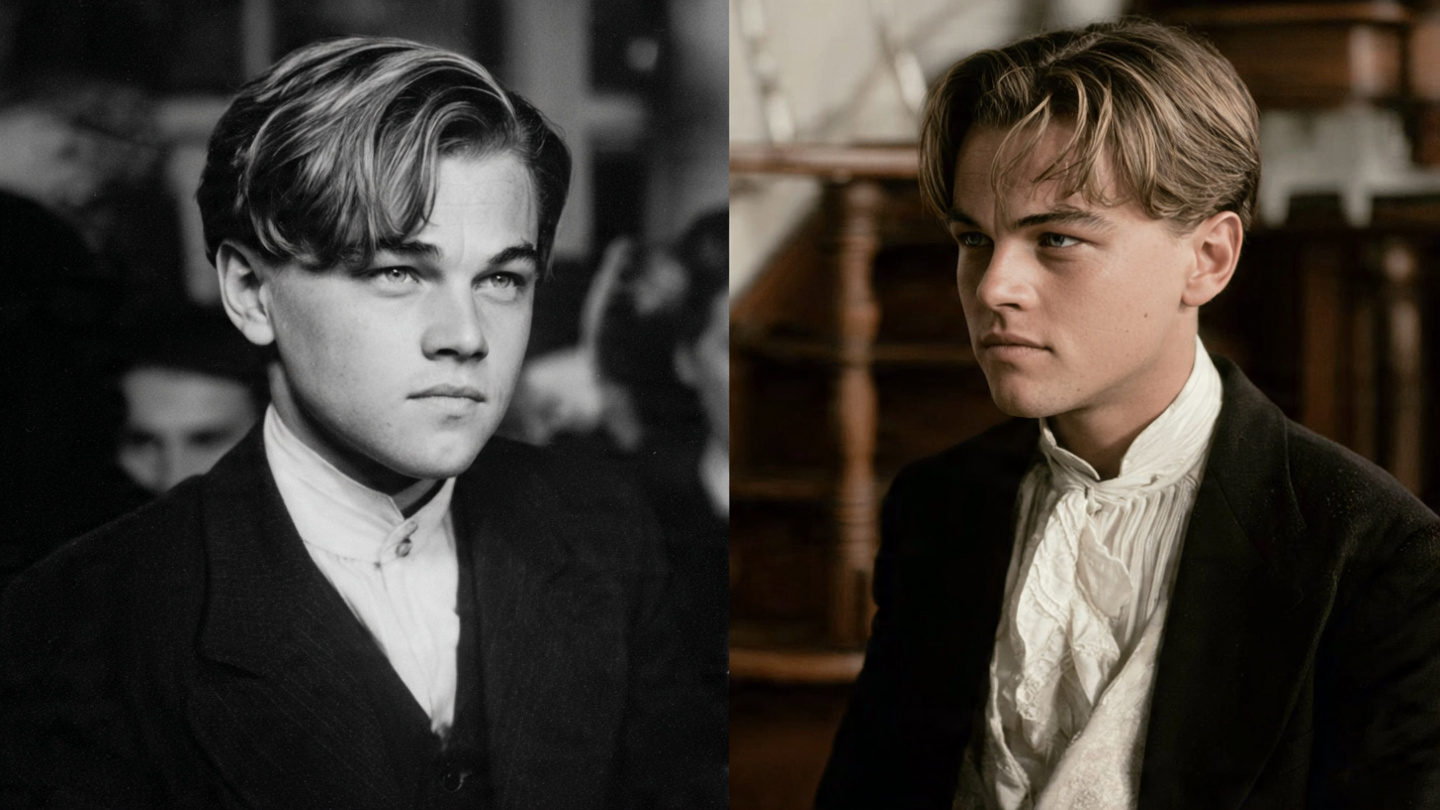
Leonardo DiCaprio as Jack Dawson: A Face That Drifted Beyond the Ship
When Titanic first arrived, Leonardo DiCaprio’s Jack Dawson felt like motion itself. He moved easily through crowded decks and narrow hallways, carrying a sense of freedom that didn’t belong to the ship or the era. Jack wasn’t tied to a room or a future—he belonged to the moment.
Watching now, that restlessness feels quieter. Jack’s charm isn’t just confidence; it’s impermanence. He sleeps where he can, sketches what he sees, and leaves little behind except impressions. For renters especially, that emotional rhythm feels familiar—the idea of passing through spaces without fully claiming them, yet still leaving something of yourself behind.
Seeing DiCaprio today, the shift is subtle but real. His presence has matured, settled. The youthful lightness of Jack now feels preserved in amber, tied forever to the narrow corridors of the ship. It’s less about where DiCaprio is now and more about where Jack stays—in a version of freedom that existed only briefly.

That character lingers because he never tried to own the space. He simply lived in it.
Kate Winslet as Rose DeWitt Bukater: A Woman Learning How Space Can Change
Kate Winslet’s Rose began Titanic surrounded by beauty that felt suffocating. Her rooms were elegant but heavy, filled with expectations instead of comfort. The ship offered luxury, but no ease. Watching as a younger viewer, Rose’s sadness felt dramatic. Watching now, it feels deeply physical.
Her escape wasn’t just about Jack. It was about learning how a space could feel different when it allowed breathing room. The lower decks, the open air, the movement—these places softened her. They didn’t belong to her, but they changed her.
Winslet’s career since then adds weight to that transformation. Seeing her today, there’s a grounded presence that makes Rose’s journey feel less like rebellion and more like self-recognition. The character didn’t find a new place to live—she found a new way to exist within space.
For renters, this resonates quietly. Sometimes a home isn’t defined by its beauty or size, but by whether it lets you exhale when you’re inside it.
Rose didn’t need permanence. She needed room to become herself.
Billy Zane as Cal Hockley: Control, Ownership, and Empty Rooms
Billy Zane’s Cal Hockley filled Titanic with tension. He moved through grand rooms as if they were extensions of himself—measured, polished, controlled. Everything around him felt owned, curated, and closed.
As time passes, Cal feels less villainous and more hollow. His spaces are impressive but cold. Nothing shifts when he enters a room. Nothing softens. Zane’s performance highlights how ownership without connection leaves rooms feeling untouched, no matter how luxurious they are.
Watching now, Cal’s presence stands in contrast to the rest of the cast. He represents spaces that look finished but feel unfinished. Rooms that impress but don’t welcome.

For those living in rented homes, this contrast feels intuitive. Comfort rarely comes from control. It comes from familiarity—small disruptions, rearranged corners, signs of life.
Cal’s rooms survive the film unchanged. And that, quietly, says everything.
Kathy Bates as Molly Brown and the Characters Who Made Space Feel Human
Kathy Bates’ Molly Brown brought warmth into Titanic wherever she appeared. She didn’t glide through rooms—she filled them. Her laughter, confidence, and ease shifted the atmosphere around her. She made spaces feel lived-in, even briefly.
Looking at Bates today, that warmth feels consistent, almost comforting. Molly Brown wasn’t defined by where she stood on the ship, but by how she made others feel within it. Her presence softened rigid spaces and blurred social boundaries.
The supporting cast of Titanic did something similar. They turned corridors, cabins, and decks into emotional environments rather than just sets. The ship itself became less of a monument and more of a temporary home filled with intersecting lives.
For renters, this feels deeply familiar. A space becomes meaningful not through permanence, but through moments—shared laughter, quiet conversations, fleeting connections.
The stars of Titanic didn’t just move on. They left behind a feeling that still drifts through the film, long after the ship disappears beneath the surface.
AI Insight:
Some movies remind people that even the most temporary places can hold emotions that stay longer than the space itself ever did.