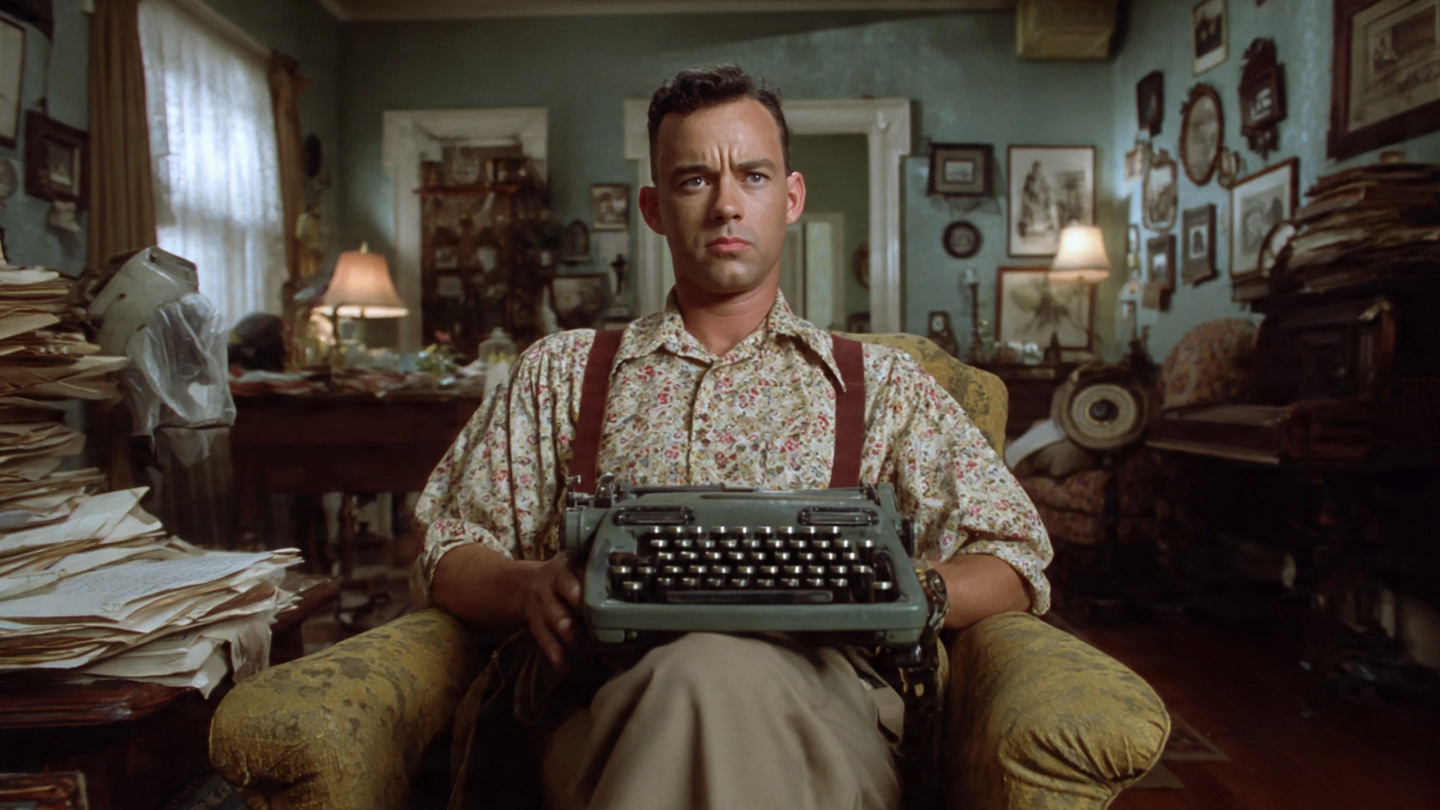
Tom Hanks as Forrest Gump: A Life That Passed Gently Through Many Rooms
When Forrest Gump first appeared, Tom Hanks’ Forrest felt like someone who never tried to shape the world around him. He moved through bedrooms, bus stops, army barracks, and quiet houses without altering them. Spaces didn’t bend to his will—they simply held him for a while.
As younger viewers, Forrest’s journey felt extraordinary because of where he went. Watching now, it feels extraordinary because of how lightly he passed through. Hanks played Forrest with a calm acceptance that made every place feel temporary but meaningful. He never tried to claim a room. He simply existed inside it.
Seeing Tom Hanks today adds another layer of warmth. His presence feels steady, familiar, almost grounding. Forrest now feels less like a character and more like a reminder that life doesn’t always announce its significance. Sometimes meaning gathers quietly in the corners of ordinary spaces.
For renters, this feeling resonates deeply. Many know what it’s like to live in places that aren’t permanent, yet still hold pieces of who you were at the time. Forrest’s story reminds viewers that you don’t need to stay long for a place to matter.

He didn’t build a life by settling into rooms. He built it by moving through them honestly.
Robin Wright as Jenny Curran: Searching for Safety in Changing Spaces
Robin Wright’s Jenny Curran lived in constant motion. Her rooms changed often—childhood homes that didn’t protect her, shared spaces that felt unstable, apartments that never quite became safe. Watching as kids, Jenny’s choices often felt confusing or frustrating.
Watching now, her restlessness feels heavy and understandable. Jenny wasn’t running toward something; she was running away from spaces that had already hurt her. Wright’s performance carries quiet exhaustion, even in moments of freedom. The rooms she occupies rarely feel settled, no matter how beautiful or full they appear.
Seeing Robin Wright today adds clarity rather than distance. Her presence now feels strong and composed, which makes Jenny’s vulnerability feel even more real in retrospect. The character wasn’t broken—she was searching for a place where she could finally exhale.
For renters, Jenny’s story feels uncomfortably familiar. Sometimes a space looks fine on the outside but never feels safe on the inside. Moving becomes a form of hope, even when it’s exhausting.
Jenny’s journey reminds viewers that home isn’t always found—it’s sometimes slowly built after years of not having one.
Gary Sinise as Lieutenant Dan: Learning How Space Can Change With Time
Gary Sinise’s Lieutenant Dan began the film in constant motion—training fields, helicopters, barracks shaped by discipline and expectation. These spaces defined him. They told him who he was supposed to be.
After the war, his environments shift dramatically. Hospital rooms, cramped apartments, boats that rock unpredictably beneath his feet. These spaces feel smaller, heavier, unfinished. Watching as kids, Dan’s anger felt loud. Watching now, it feels deeply tied to the loss of familiarity.
Sinise played Dan’s transformation with restraint. He didn’t soften overnight. He learned how to exist in new spaces that didn’t reflect the life he expected. Over time, those same spaces begin to change—not because they improve, but because Dan does.
Seeing Sinise today gives that arc a quiet dignity. Lieutenant Dan’s story feels less about recovery and more about adaptation. Some places don’t heal you immediately. They simply give you enough room to keep going.
For renters, this lands gently. A new space doesn’t always feel like home right away. Sometimes it takes time before the walls stop reminding you of what you lost and start reflecting who you are becoming.
Dan didn’t find peace by returning to old rooms. He found it by allowing new ones to feel possible.
Sally Field as Mrs. Gump and the Spaces That Held Everything Together
Sally Field’s Mrs. Gump anchored the film emotionally. Her home felt warm, consistent, and lived-in—not because it was perfect, but because it was steady. The house didn’t change much, even as Forrest’s life expanded far beyond it.
Watching now, her role feels even more essential. Field’s performance carries reassurance without control. She allowed Forrest to leave while making sure he always had somewhere to return to. The house became less of a location and more of a feeling.
Seeing Field today deepens that sense of quiet strength. Mrs. Gump didn’t hold onto Forrest—she held space for him. And that made all the difference.
For renters, this idea feels comforting. Some homes don’t last forever, but the sense of being welcomed somewhere can stay with you long after you’ve moved on. Mrs. Gump’s home wasn’t impressive. It was dependable.
Looking back, the cast of Forrest Gump hasn’t just aged—they’ve softened the story with time. What once felt like a sweeping journey now feels intimate, shaped by ordinary rooms and fleeting stays.
The film lingers because it understands something simple: life doesn’t always unfold in the places we expect, but those places still matter.
AI Insight:
Revisiting familiar characters sometimes reveals that the spaces they passed through feel meaningful now not for how long they lasted, but for how gently life moved within them.