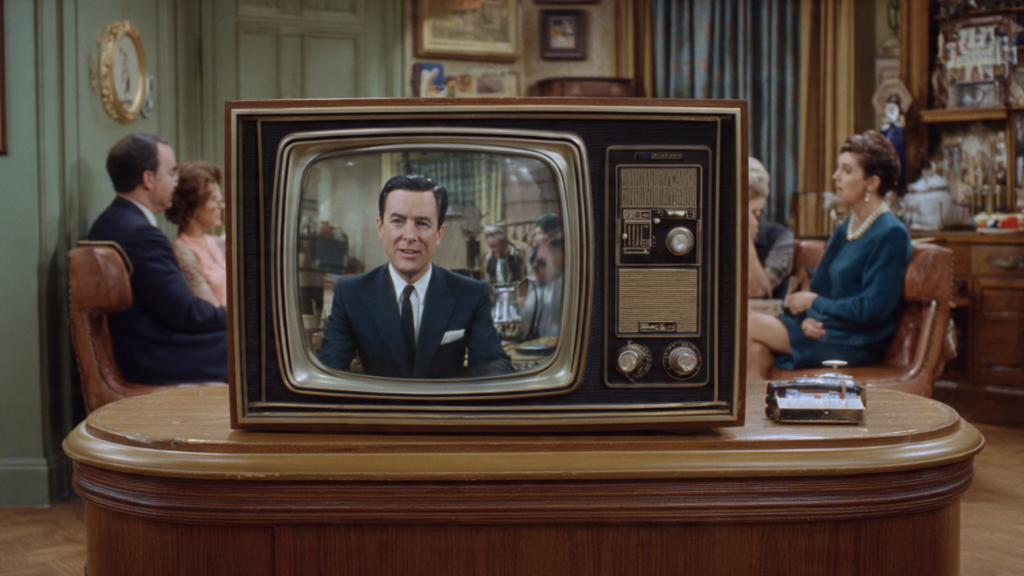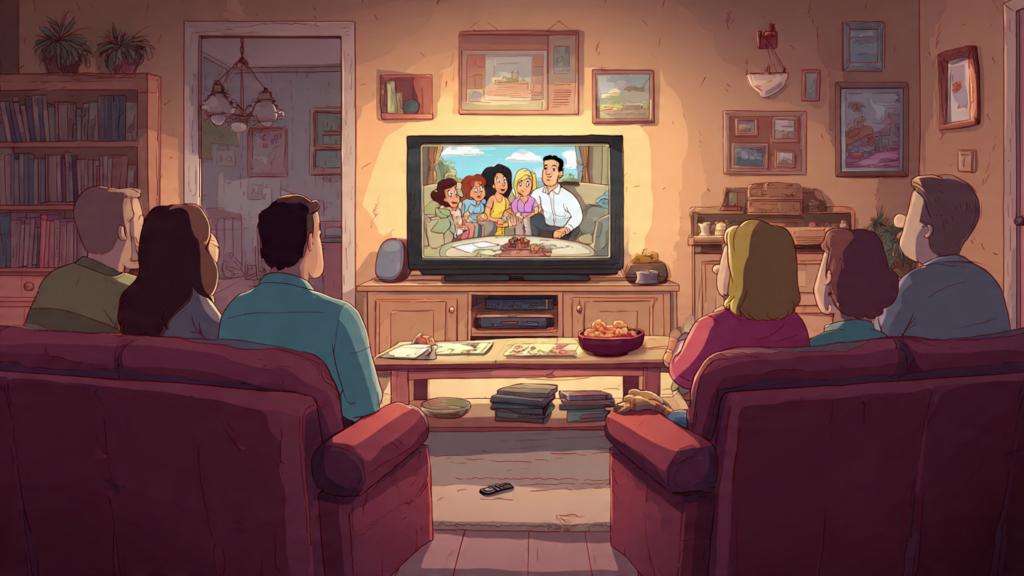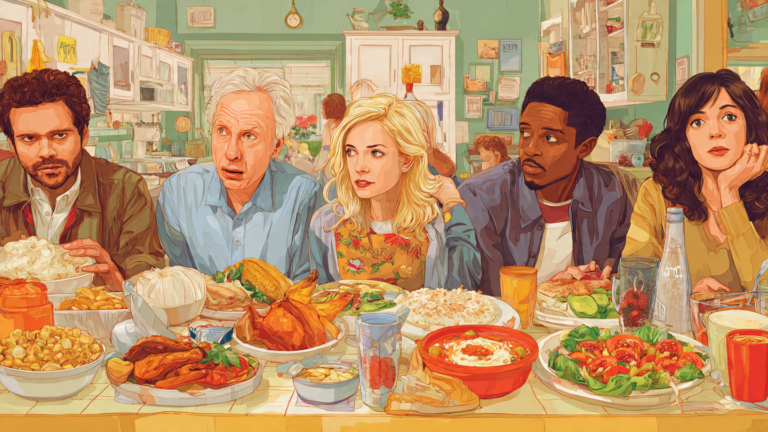
Some television shows feel less like stories and more like warm meals. Turning them on brings the same ease as settling into a familiar chair or sipping a favorite drink. There is no pressure to focus, no fear of missing something important.
These are the shows people return to during tired evenings, quiet weekends, and moments that need softness rather than stimulation. They do not demand attention. They offer presence.
They feel comforting because they were never meant to impress. They were meant to stay.
✨ AI Insight:
As on-demand viewing becomes routine, certain TV shows quietly shift into emotional background roles, helping people regulate mood in the same way familiar music or food does.
Familiar Rhythm Creates Calm
Comfort-food shows follow a predictable rhythm. The tone is steady, the pacing is gentle, and the outcome is never truly in doubt.

An episode of Friends or The Office unfolds in a way the mind already understands. Conflict appears, humor softens it, and warmth returns.
This rhythm reduces mental effort. The brain relaxes because it knows where the story is going.
That certainty becomes soothing.
Characters Who Feel Like Company
These shows create the feeling of not being alone. The characters are not observed from a distance. They feel present.
Joey’s optimism, Pam’s quiet warmth, Leslie Knope’s enthusiasm, and Frasier’s insecurity feel recognizable. Their habits become familiar.
Watching becomes companionship. The show fills space the way another person might.
Silence feels less empty.
Humor That Never Pressures
Comfort-food shows rarely rely on shock or speed. Their humor is observational and gentle.
Parks and Recreation builds comedy from kindness. Brooklyn Nine-Nine balances jokes with warmth. Frasier turns insecurity into charm.
Laughter arrives naturally. It does not require effort. The show feels friendly rather than demanding.
That tone invites return.
Worlds That Feel Safe
These series build environments that feel emotionally stable. Dunder Mifflin, Central Perk, Pawnee’s city hall, and the Crane apartment become familiar spaces.
Viewers return not only for story, but for place. These settings remain consistent even when life does not.
The show becomes a room that never rearranges itself.
That stability matters.
Episodic Design That Welcomes Drop-In Viewing
Comfort-food shows are easy to enter. Each episode stands alone.
There is no need to remember complex arcs. An episode can play while cooking, resting, or thinking.
The show becomes a companion rather than a commitment.
It fits around life instead of competing with it.
Emotional Honesty Without Weight
These shows allow feeling without heaviness. They touch on loneliness, friendship, failure, and growth gently.
The Office frames insecurity through humor. Ted Lasso explores kindness without sentimentality. Modern Family reflects everyday chaos with warmth.
Emotion appears, then softens. The viewer never feels overwhelmed.
The experience remains light, even when it is meaningful.
Why Repetition Feels Good
Rewatching reduces uncertainty. The brain does not need to predict.
Scenes feel known. Reactions are anticipated. Stress lowers.
The story becomes predictable in the best way.
It becomes safe.
These shows are returned to during change, fatigue, and quiet.
They become emotional shelter.
Sound That Signals Comfort
Theme songs and familiar background music often trigger comfort instantly.
A few notes from Friends or The Office can shift mood before a scene begins.
Sound becomes a signal that things will be okay.
The show announces safety.
Shows That Grow With the Viewer
Comfort-food shows change meaning over time. A joke lands differently. A character becomes more relatable.
The show remains the same. The viewer evolves.
Rewatching becomes reflection without effort.
The story adapts quietly.

Why These Shows Matter
They matter because they provide rest.
They allow the mind to pause.
They offer company without demand.
They turn ordinary moments into softer ones.
They prove that entertainment can feel like care.
The Series People Return To
For many, comfort-food TV includes:
Friends
The Office
Parks and Recreation
Frasier
Brooklyn Nine-Nine
Modern Family
Ted Lasso
These are not just shows.
They are background warmth.
They are emotional routine.
They are quiet company.
They feel like comfort food because they nourish without asking.
They stay because they fit.